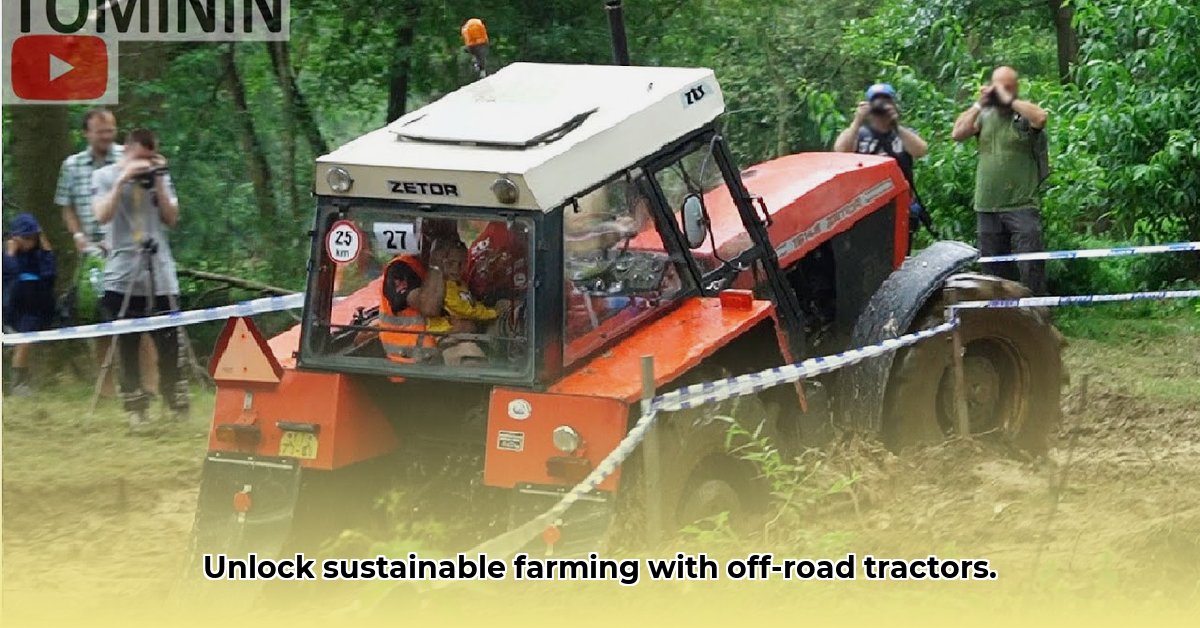
Choosing the Right Offroad Tractor for Your Sustainable Farm
Selecting the right offroad tractor is a critical decision for any modern farmer, impacting both efficiency and environmental sustainability. This guide provides a comprehensive comparison of leading brands and offers actionable advice to help you choose the best vehicle for your farm's unique needs. We'll explore electric vs. gas options, sustainability considerations, and future trends. For detailed tractor specifications, check out this helpful resource: tractor specs.
Comparing Top Brands: John Deere vs. Tracker Offroad
Two prominent manufacturers, John Deere and Tracker Offroad, offer distinct approaches to offroad tractors. John Deere's Work Series represents high-capacity, heavy-duty options suitable for large-scale operations. They also offer electric Gators, smaller, environmentally friendly models with certain limitations. Tracker Offroad focuses on affordability and accessibility, boasting a potentially broader dealer network, beneficial for farmers in remote locations.
| Feature | John Deere Work Series | Tracker Offroad | Considerations |
|---|---|---|---|
| Typical Payload | High (up to 1000 lbs and more, depending on model) | Generally lower | What are the heaviest loads you regularly transport? |
| Fuel Type | Gasoline, Diesel, and Electric options available | Primarily Gasoline (some models may offer others) | Fuel costs and environmental impact are key factors. |
| Dealer Network Access | Extensive, well-established network | Broad network, but density may vary geographically | Convenience and timely service are crucial. |
| Price Range | Typically higher initial investment | Generally lower initial purchase price | Account for long-term costs: fuel and maintenance. |
| Sustainability Metrics | Limited publicly available lifecycle assessment data | Limited publicly available lifecycle assessment data | Demand more comprehensive sustainability data! |
Sustainability: The Environmental Impact of Offroad Tractors
Sustainable farming practices necessitate careful consideration of the environmental impact of all equipment. While both brands offer various options, comprehensive lifecycle assessment (LCA) data remains scarce. This lack of transparency hinders informed decision-making. Electric tractors may seem environmentally superior initially, but their energy source, battery life, and eventual disposal must be factored into a holistic LCA. We must urge manufacturers to provide more transparent data to facilitate better choices. Don't you agree that complete transparency is essential for truly sustainable farming?
Choosing Your Offroad Tractor: A Practical, Step-by-Step Guide
- Assess Your Needs: Honestly evaluate farm size, task types, and budget. What are your daily transport needs?
- Capacity vs. Environmental Impact: Weigh needs against environmental goals. Will a high-capacity gas-powered model suffice, or would a smaller, electric model meet your requirements?
- Prioritize Local Support: A strong dealer network ensures timely maintenance and repairs.
- Comprehensive Research: Consult independent reviews and compare models beyond manufacturer claims.
- Test Drive (If Possible): Hands-on experience provides invaluable insight into handling and performance.
Future Trends: Technological Advancements and Policy Implications
Advancements in battery technology promise increased range and power for electric models. Simultaneously, the development of rural charging infrastructure remains crucial for wider adoption. Governmental regulations and incentives will play a key role in shaping the future of sustainable farming equipment. What role will government incentives play in your next equipment purchase?
Conclusion: Investing in Your Farm's Future
Choosing an offroad tractor is a substantial investment. By carefully assessing your needs, prioritizing environmental responsibility, and conducting thorough research, you can select a machine that maximizes farm efficiency and minimizes environmental impact. Your choice today impacts your farm’s future for years to come.
How to Compare Lifecycle Costs of Electric vs. Gas Utility Vehicles
Key Takeaways:
- Electrification offers significant environmental benefits, but higher initial costs are a barrier.
- A comprehensive lifecycle cost analysis is crucial for informed decision-making.
- Factors beyond initial purchase price significantly impact long-term sustainability and profitability.
- Government incentives and technological advancements will shape the future.
Understanding Lifecycle Cost
The true cost of a utility vehicle extends beyond the initial purchase price. A comprehensive analysis needs to include initial cost, fuel/electricity expenses, maintenance, repairs, and resale value. Electric tractors require considering battery replacement costs, while gas-powered models will have ongoing fuel and engine maintenance expenses. How do you balance initial cost with long-term fuel and maintenance expenses?
Step-by-Step Lifecycle Cost Comparison
- Define needs: Tasks, annual operating hours, farm size.
- Gather quotes: Obtain detailed quotes including maintenance plans and warranties.
- Estimate fuel costs: Calculate annual expenses based on projected usage and local prices.
- Project maintenance costs: Factor in projected maintenance and repair costs.
- Assess resale value: Research typical resale values for both types.
- Calculate total lifecycle costs: Sum all projected costs over a defined timeframe (e.g., 10 years).
Sustainability Beyond the Bottom Line
While cost is a major consideration, environmental impact is equally important. Electric vehicles generally have lower carbon footprints, but manufacturing and battery disposal must be factored into the calculation. How do you weight environmental impact against economic considerations?
Sample Comparison (Illustrative Only)
| Feature | Electric Tractor | Gas Tractor |
|---|---|---|
| Initial Price | $150,000 | $100,000 |
| Annual Fuel Cost | $2,000 | $5,000 |
| Annual Maintenance | $1,000 | $3,000 |
| Battery Replacement (10 years) | $30,000 | N/A |
| Resale Value (10 years) | $50,000 | $30,000 |
| Total Lifecycle Cost (10 years) | $232,000 | $183,000 |
Note: These are illustrative figures and will vary significantly.